

 Video call
 Talk to expert


 en
en




 Facebook
 Linkedin
 X (Twitter)
 Reddit
 Mail
Mail
 Copy Link

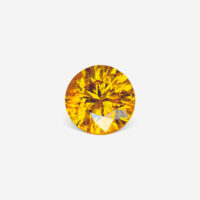
In the world of diamonds and precious gemstones, certification serves as the cornerstone of trust between buyers and sellers. Whether you’re acquiring a brilliant diamond engagement ring or investing in a rare colored gemstone, understanding the role of gemological laboratories can transform your purchasing decisions and protect your investment for generations to come.
At Reuven Veksler, we believe in complete transparency. Every piece in our diamond collection and gemstone selection comes with proper certification from the world’s most respected laboratories. To help you understand what these certificates mean, we’ve created this comprehensive guide to the major certification centers that authenticate and grade the world’s most precious stones.
The Foundation of Gemological Certification
Certification centers, also known as gemological laboratories, emerged from a critical need in the global gem trade: establishing uniform standards for evaluating quality and authenticity. These independent institutions protect both buyers and sellers by providing unbiased assessments of a gemstone’s characteristics.
For diamonds, this means evaluating the famous “4Cs” – carat weight, color, clarity, and cut quality. For colored gemstones, laboratories assess species identification, origin determination, and treatment detection. Each certificate serves as a gemstone’s passport, documenting its unique characteristics and ensuring you receive exactly what you’re paying for.
As the gem trade globalized throughout the 20th century, these laboratories became indispensable. They answer essential questions: Is this diamond natural or synthetic? Has this ruby been heat-treated? What is the true origin of this Kashmir sapphire? The answers can mean the difference between a wise investment and a costly mistake.
The Major International Certification Laboratories
Gemological Institute of America (GIA)
Founded in 1931 in Los Angeles by jeweler Robert M. Shipley, GIA stands as the most influential gemological institution in the world. After studying gemology in Europe, Shipley recognized the American jewelry industry’s need for scientific standards and professional education.
GIA’s revolutionary contribution came in 1953 with the creation of the International Diamond Grading System and the codification of the 4Cs. This framework transformed diamond trading from a subjective art into a standardized science, providing a common language for the global industry.
Today, GIA operates as a non-profit organization with laboratories and educational campuses in thirteen countries. Their services span diamond grading, colored stone identification, pearl analysis, and cutting-edge research on treatments and synthetic gemstones. When you see a GIA certificate accompanying a stone in our diamond collection, you’re seeing the gold standard of gemological certification – unbiased, scientifically rigorous, and universally trusted.
International Gemological Institute (IGI)
Established in Antwerp’s diamond district in 1975 by Marcel Lorie, IGI has grown into the world’s largest certification network by volume. With over thirty laboratories across ten countries and eighteen gemology schools, IGI serves the global jewelry industry from Antwerp to Mumbai, New York to Shanghai.
In 2023, private equity firm Blackstone Group acquired IGI, reflecting its substantial market value and influence. The laboratory has built its reputation particularly in the consumer market, grading diamonds mounted in finished jewelry and providing comprehensive certification for laboratory-grown diamonds.
IGI maintains ISO 9001 certification in multiple countries, attesting to its quality management systems. While some industry veterans note that IGI’s grading can be marginally more lenient than GIA’s, the laboratory remains widely accepted, especially for smaller stones and jewelry pieces. Its extensive global network makes it particularly influential in markets across Asia and the Middle East.
HRD Antwerp
Born from Belgium’s historic diamond trade, HRD (Hoge Raad voor Diamant, or Diamond High Council) was established in 1973 through a collaboration between the Belgian government and the diamond industry. Its independent grading laboratory began operations in 1976, serving the needs of Antwerp’s centuries-old diamond community.
In 2007, the organization split into the Antwerp World Diamond Centre and HRD Antwerp, with the latter continuing as a commercial laboratory while maintaining deep ties to Antwerp’s diamond heritage. Today, HRD operates advanced facilities in Antwerp, Mumbai, and Dubai, serving clients throughout Europe and Asia.
HRD specializes in diamond grading, where it is considered Europe’s leading authority. The laboratory’s procedures are notably rigorous – multiple gemologists independently grade each stone using anonymized submissions to prevent bias. Their standards comply with the International Diamond Council rules, aligning with global norms while maintaining the exacting standards for which European gemology is renowned.
For those seeking certified diamonds, an HRD certificate represents a trusted European alternative to GIA, particularly valued by European traders and collectors.
Swiss Gemmological Institute (SSEF)
In the heart of Basel, Switzerland, SSEF was founded in 1972 as a non-profit gemological laboratory under the Swiss Foundation for Gemstone Research. From its inception, SSEF maintained close academic ties with the University of Basel, integrating scientific research into practical gemological services.
While SSEF provides diamond grading, its true distinction lies in colored gemstone analysis. The laboratory has pioneered numerous gemological breakthroughs, including the first detection of beryllium diffusion treatment in corundum in 2003, DNA fingerprinting of pearls in 2013, and the development of automated screening devices for synthetic melee diamonds.
SSEF’s expertise in determining geographic origin and detecting treatments makes it the preferred choice for auction houses like Christie’s and Sotheby’s, high jewelry maisons, and serious collectors. For rare colored gemstones in our collection, an SSEF report provides the highest level of scientific certainty regarding authenticity and provenance.
Gübelin Gem Lab
The Gübelin name carries over a century of gemological heritage. What began in 1923 as an in-house testing facility for the Gübelin family’s fine jewelry business in Lucerne has evolved into one of the world’s most prestigious gemstone laboratories.
Dr. Eduard J. Gübelin, son of the founder, became a legendary figure in gemology through his groundbreaking research on gem inclusions and origin determination. His work established the foundation for modern gemstone provenance studies, creating databases of inclusion “fingerprints” that remain invaluable today.
In 2023, Gübelin celebrated its centenary by launching “Gemtelligence,” an artificial intelligence system trained on tens of thousands of gemstones to enhance origin and treatment identification. With laboratories now in Lucerne, Hong Kong, New York, and Bangkok, Gübelin serves an international clientele while maintaining its family-owned independence and commitment to research.
A Gübelin certificate accompanying a ruby, sapphire, or emerald provides not just identification but a detailed provenance narrative – crucial information that can significantly impact a gemstone’s value and historical significance.
American Gemological Laboratories (AGL)
When C.R. “Cap” Beesley founded AGL in New York City in 1977, no standardized grading system existed for colored gemstones. AGL became America’s first laboratory dedicated exclusively to colored stone certification, pioneering quantitative grading for color quality, clarity, and cut.
AGL’s flagship “Prestige Report” provides comprehensive analysis: species identification, natural versus treated status, quantified color grading, clarity assessment, cut quality evaluation, and expert opinion on geographic origin. This systematic approach brought unprecedented objectivity to colored gemstone valuation.
Under the current leadership of renowned gemologist Christopher P. Smith, who acquired the laboratory in 2009, AGL has solidified its reputation for uncompromising standards. For collectors and dealers seeking colored gemstone certification, particularly for high-value stones where origin and treatment disclosure significantly affect value, AGL represents the premier authority in North America.
Notable Regional and Specialized Laboratories
Gemological Association of All Japan (GAAJ)
Japan’s leading gemological institution dates to 1969, when several gemologists’ groups merged to form GAAJ. Formally incorporated in 1986, GAAJ established itself as a pioneer in bringing modern gemology to Japan, setting up educational courses and publishing the Japanese gemology journal “Gemmology.”
GAAJ’s international reputation rests on colored gemstone research. As one of the few laboratories globally specializing in colored gemstones, their identifying characteristics, origin determination, and treatment detection, GAAJ has produced detailed research on emerging treatments from beryllium-diffused sapphires to lead-glass filled rubies.
The laboratory’s membership in the Laboratory Manual Harmonisation Committee, collaborating with GIA, SSEF, and Gübelin to standardize nomenclature, demonstrates its standing among the world’s elite gemological institutions.
Central Gem Laboratory (CGL)
Established in Tokyo in 1970 by Masao Namiki and Akio Takahashi, CGL emerged during Japan’s post-war economic boom when rising gemstone sales demanded domestic certification standards. The founders traveled throughout Japan conducting seminars and identifying gems, building expertise that culminated in creating the Central Gem Laboratory.
CGL operates multiple branches across Japan, providing both diamond grading adhering to international standards and comprehensive colored stone identification. The laboratory’s innovation includes introducing advanced instruments like FT-IR spectroscopy in the 1990s and developing specialized equipment for distinguishing diamond types and detecting treatments.
In 1981, CGL’s founders helped unite various laboratory entities to form the Association of Gemological Laboratories of Japan, with Namiki as the first president. This association established nationwide grading guidelines, creating the framework for sound gem distribution throughout Japan.
National Gemstone Testing Center (NGTC)
As China’s state-sponsored gemological laboratory, NGTC was founded in Beijing in 1992 under what is now the Ministry of Natural Resources. The laboratory supports China’s enormous domestic jewelry market, which has grown exponentially over the past three decades.
With branches in Beijing, Shanghai, Shenzhen, Guangzhou, Shenyang, Yunnan, and Hong Kong, NGTC provides comprehensive services from diamond grading to jadeite jade certification – the latter reflecting jade’s cultural importance in China. The laboratory has developed Chinese national standards for gemstone grading while maintaining ISO/IEC 17025 accreditation for international recognition.
Within China, NGTC certificates are considered the most authoritative, often required for retail jewelry sales. As China has become one of the world’s largest gemstone markets, NGTC plays a crucial role in consumer confidence and quality benchmarking.
Gem and Jewelry Institute of Thailand (GIT)
Founded in 1998 as a public organization under Thailand’s Ministry of Commerce, GIT represents a successful public-private partnership housed on Chulalongkorn University’s campus in Bangkok. The Thai government created GIT as part of the country’s initiative to establish itself as an international gem trading hub.
Thailand’s position as a major source and trading center for colored stones – particularly sapphire and ruby – makes GIT’s role especially significant. The laboratory provides world-class gemological services, including identifying natural versus synthetic gems, detecting treatments in Thailand’s extensive gem processing industry, grading diamonds and rubies, and determining gemstone origin.
GIT’s membership in the Laboratory Manual Harmonisation Committee reflects its international standing, while its multiple functions – including gemology education, jewelry design courses, and even a museum showcasing Thai gems – demonstrate its comprehensive approach to supporting the country’s gem industry.
The Importance of Proper Certification
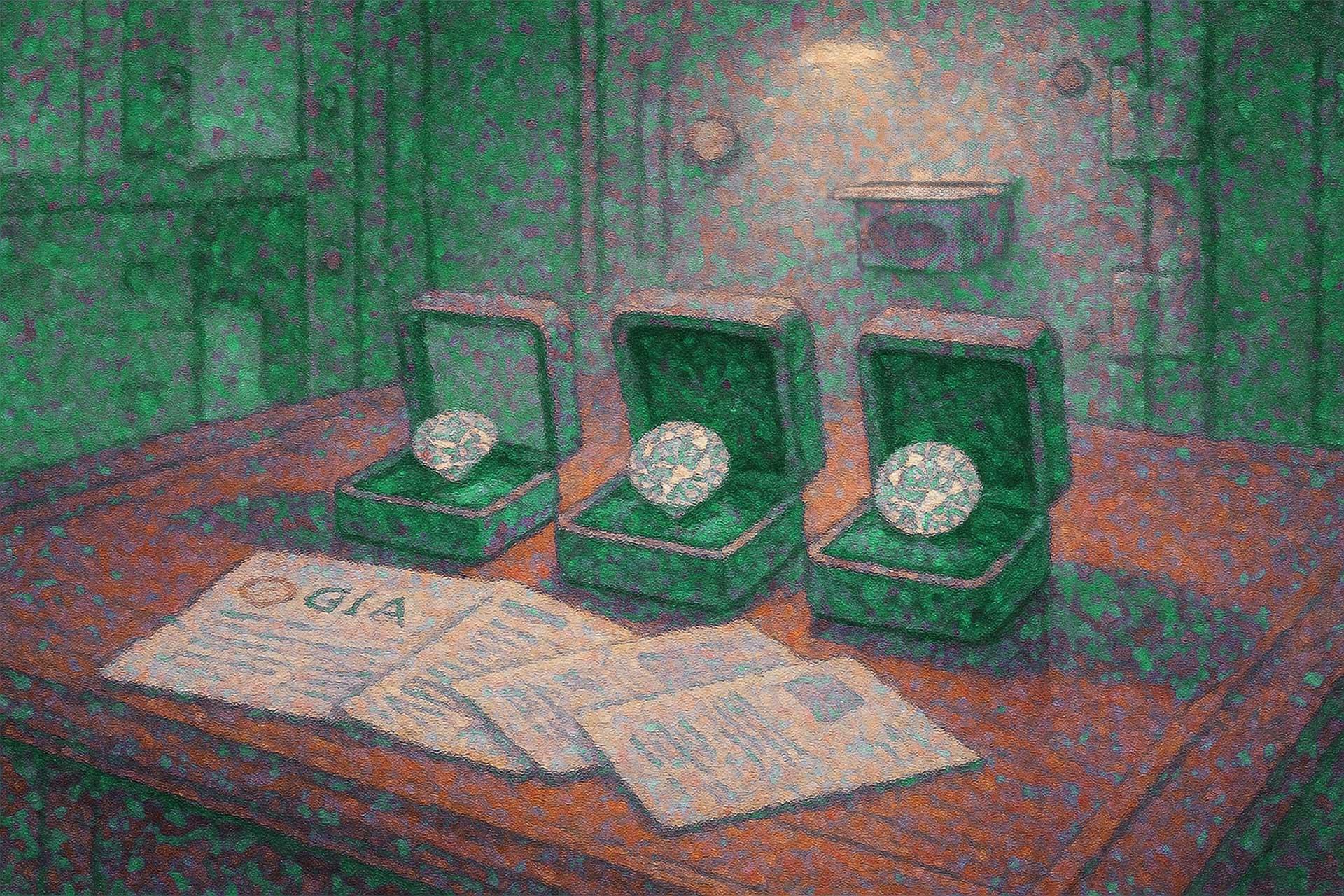
When you explore our diamond collection or gemstone offerings, each piece comes with certification from these respected institutions. This isn’t mere paperwork – it’s your assurance of authenticity, your documentation of quality, and your protection as a collector or investor.
Understanding these laboratories helps you make informed decisions. A GIA certificate on a diamond provides universal recognition and liquidity. An SSEF or Gübelin report on a Kashmir sapphire authenticates both its geographic origin and natural status – factors that can multiply a stone’s value. An AGL certification on a Burmese ruby documents not just what the stone is, but its quality ranking among its peers.
At Reuven Veksler, transparency through certification isn’t optional – it’s fundamental to our business philosophy. For those seeking to deepen their knowledge, our education center offers additional resources on understanding gemstone quality, treatments, and valuation.
Whether you’re purchasing your first diamond or adding a rare gemstone to an established collection, certification provides the foundation of confidence. These laboratories – from century-old family institutions to modern state-sponsored facilities – work collectively to ensure that beauty, rarity, and value are properly documented and protected.
The world of fine gemstones is built on trust, and that trust is secured through the rigorous, scientific work of these certification centers. When you invest in certified gems, you’re not just buying a beautiful stone – you’re acquiring a piece of Earth’s geological heritage with a documented pedigree that will serve you and your heirs for generations to come.
Comparison of Major Certification Centers
To help you understand the landscape of gemological certification, we’ve compiled a comprehensive comparison of the world’s leading laboratories. Each brings unique strengths and specializations to the industry:
| Laboratory | Founded | Location | Type | Primary Specialization |
|---|---|---|---|---|
| GIA | 1931 | USA (13 countries) | Non-profit | Diamonds, colored stones, pearls – industry gold standard |
| IGI | 1975 | Belgium (10 countries) | Commercial | Diamonds, jewelry, lab-grown diamonds – largest by volume |
| HRD Antwerp | 1973 | Belgium (3 locations) | Commercial | Diamond grading – Europe’s leading authority |
| SSEF | 1972 | Switzerland | Non-profit foundation | Colored stones, origin determination, treatment detection |
| Gübelin | 1923 | Switzerland (4 locations) | Family-owned independent | High-value colored stones, origin certification |
| AGL | 1977 | USA | Independent commercial | Colored gemstones – North America’s premier authority |
| GAAJ | 1969 | Japan | Research institute | Colored stone research, treatment detection |
| CGL | 1970 | Japan (multiple branches) | Commercial | Diamonds and colored stones – Japan’s leading lab |
| NGTC | 1992 | China (7 branches) | State-sponsored | All gemstones, jadeite jade – China’s national authority |
| GIT | 1998 | Thailand | Public-private partnership | Colored stones, treatment detection – Southeast Asia leader |
Key Distinctions Among Certification Centers
For Diamond Certification
Most universally recognized: GIA remains the global gold standard, with certificates accepted worldwide and often commanding premium prices.
European preference: HRD Antwerp is highly trusted in European markets and among Antwerp’s diamond trading community.
Largest volume: IGI processes more diamonds than any other laboratory, making it dominant in consumer jewelry markets, particularly in Asia.
For Colored Gemstone Certification
High-value auction pieces: SSEF and Gübelin are preferred by Christie’s, Sotheby’s, and serious collectors for their origin determination expertise.
North American standard: AGL is the premier choice for colored stone grading and quality assessment in the United States.
Treatment detection research: GAAJ leads in scientific research on emerging treatments and publishes findings that benefit the entire industry.
Regional Authorities
Japan: CGL and GAAJ dominate the Japanese market with internationally recognized standards.
China: NGTC certificates are required for most retail sales and are considered authoritative for jadeite jade.
Thailand: GIT specializes in ruby and sapphire certification, crucial given Thailand’s role as a major gem processing center.
Choosing the Right Certification
The choice of certification laboratory often depends on the type of gemstone, its value, and your intended market. At Reuven Veksler, we ensure each piece receives certification from the most appropriate laboratory for its characteristics:
- Investment-grade diamonds: GIA or HRD certification provides maximum liquidity and universal recognition
- Rare colored gemstones: SSEF or Gübelin reports authenticate origin and natural status for high-value pieces
- Fine colored stones: AGL certification offers comprehensive quality grading for the North American market
- General certification needs: IGI provides reliable certification at competitive pricing for a wide range of jewelry
Browse our diamond and gemstone collections to see certification in practice. Every certificate tells a story of scientific rigor, industry expertise, and your peace of mind.





 Back
Back